Reference: D:06015
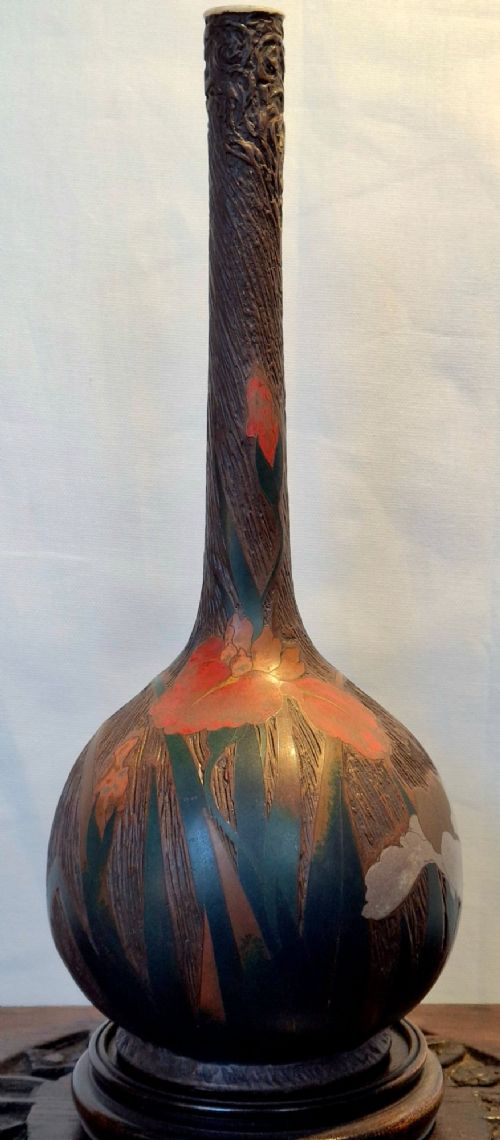
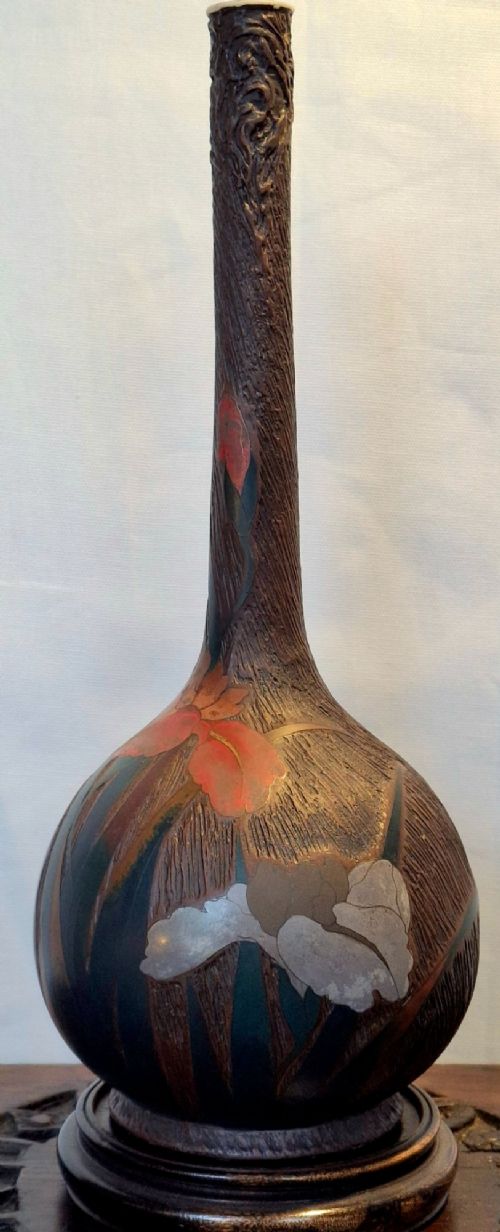
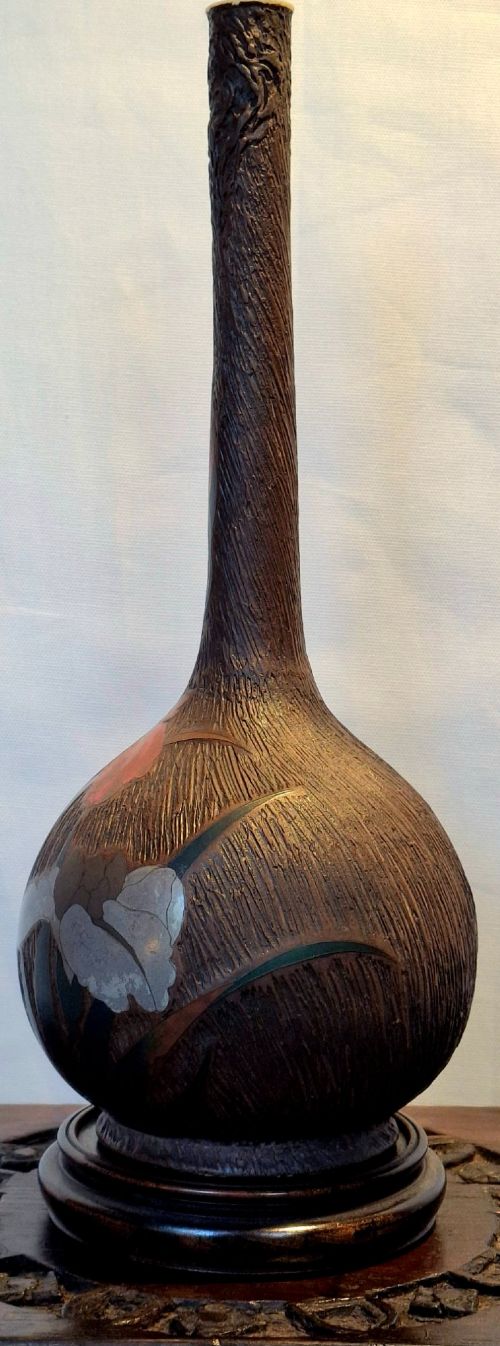
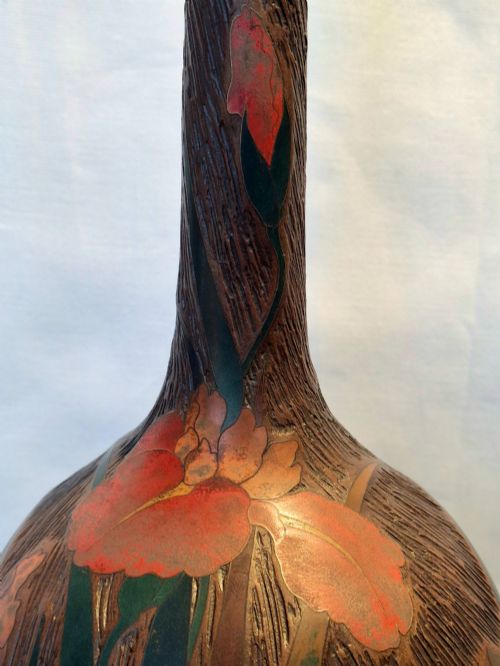
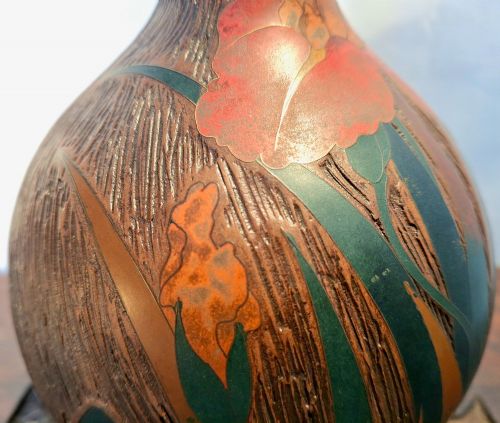
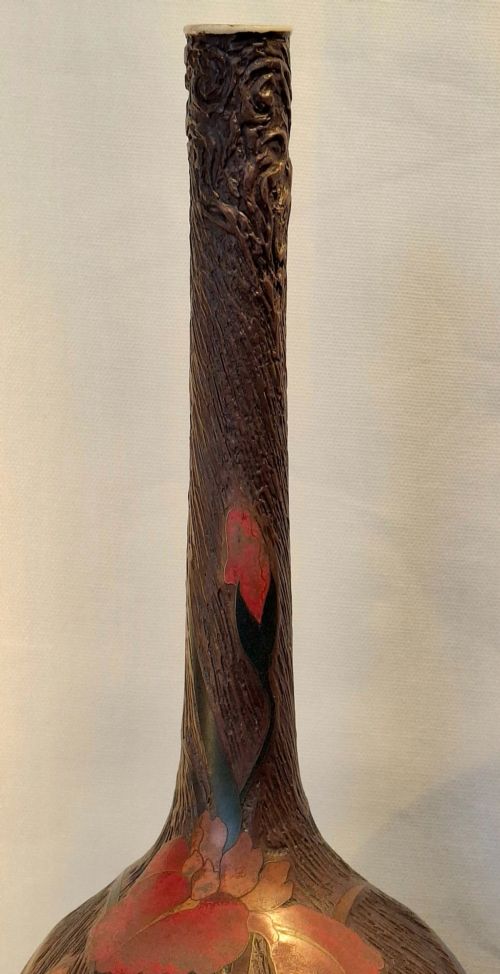
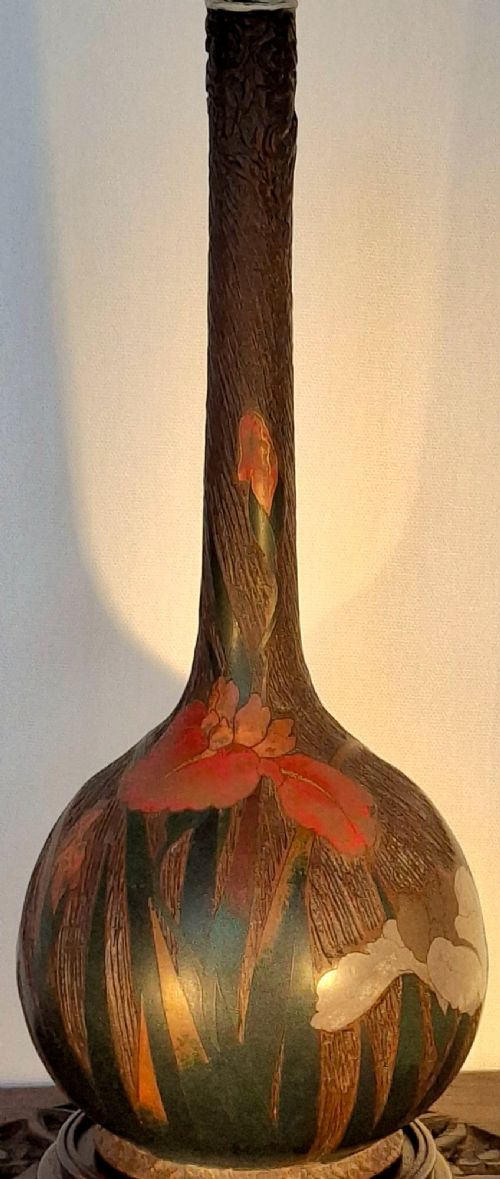
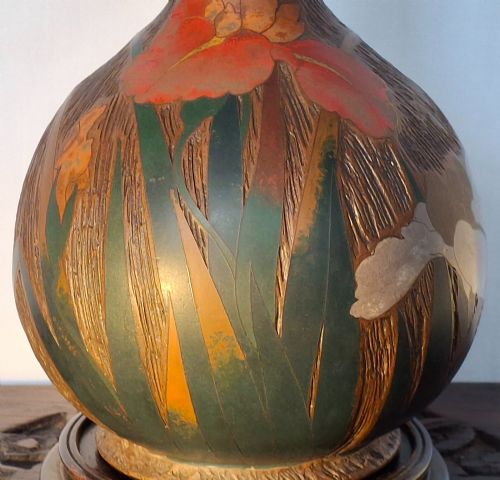
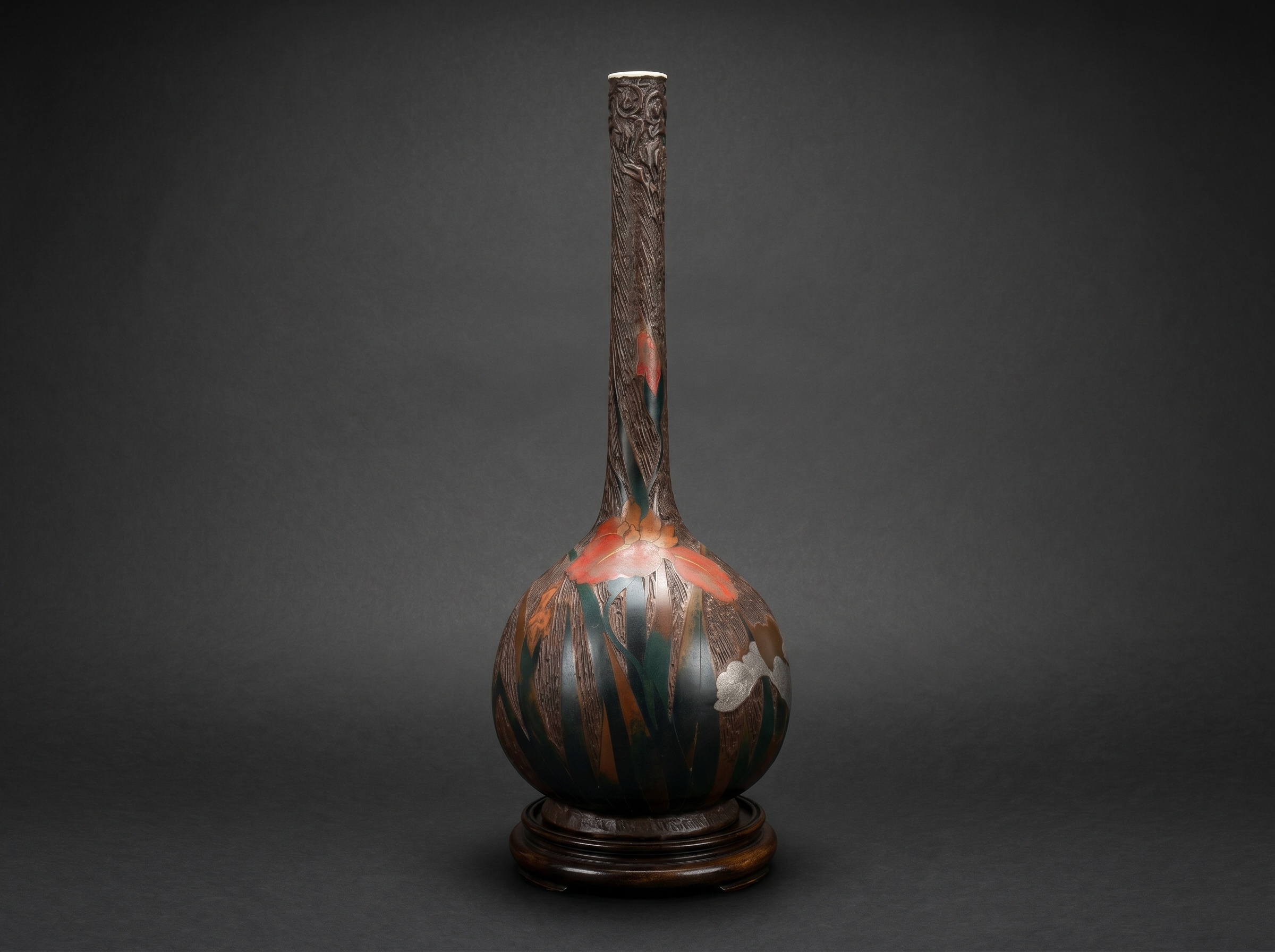
Japanese Totai Shippo Tall Flower Vase. Cloisonne Tree Bark - Irises. Circa 1890.
Price £975
Description
Japanese Totai Shippo Tall Flower Vase. Cloisonne Tree Bark - Irises. Circa 1890.
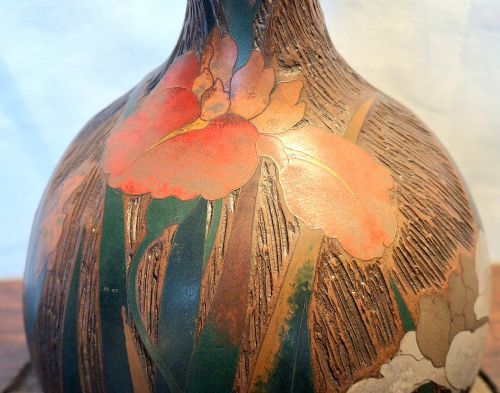
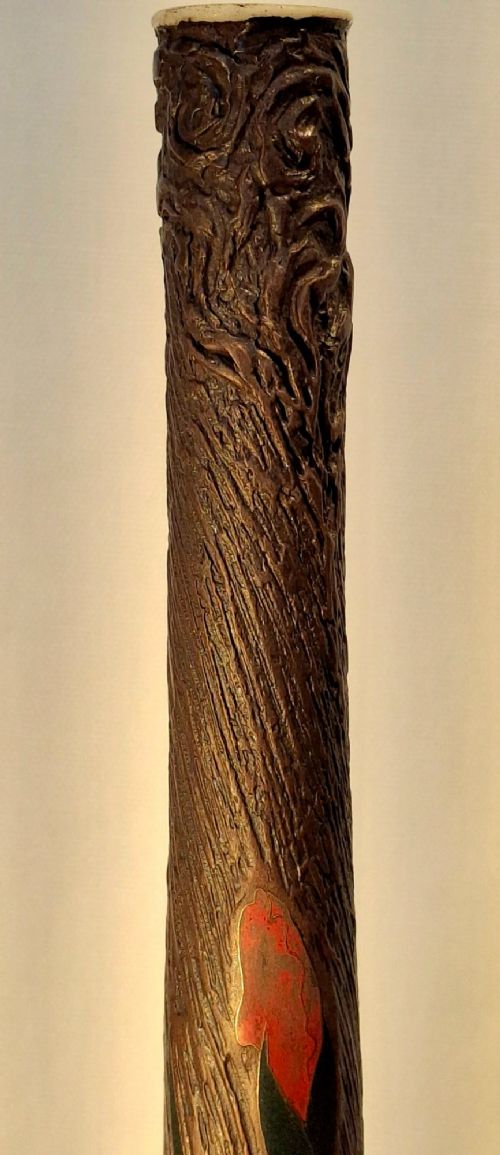
Beautifully decorated cloisonne 'tree bark' flower vase. Simple and extremely effective with natural flowering iris plants. Excellent use of vivid urushi lacquer colours in red, greens and silver/ ivory. The cloisonne work superbly decorated with foliage showing early signs of autumnal withering. The creativity and artwork is superlative, and of the highest artisan quality. Finely rendered in the Totai Shippo technique on porcelain. An extremely difficult process with superb workmanship, rich colours and beautiful contrast, representing Japanese Iris cultivation of 'single perfect bloom per stalk'.
Condition: Urushi lacquer work and porcelain in excellent condition.
[Display stand not included].
Dimensions:
Height = 29 cm
Diameter (widest point) = 12.5 cm
*Iris ensata (syn. Iris kaempferi) is one of the archetypal plants of the Japanese garden. They are rhizomatous, beardless irises, native to East Asia. They have fans of strap shaped leaves and flowering stems 2-4ft tall. They flower in early summer, with two or three large, exotic-looking flowers on a stem. Red and white Japanese irises (Iris ensata) are prized for their elegant, broad petals often featuring delicate veining or striking bicolour patterns. Notable Japanese varieties include 'Flashing Koi', which has large white flowers with crimson-red veins, 'Royal Pageant', known for its regal white and reddish-purple tone, and large red flowers.
**Totai shippo, meaning "body cloisonné," is a Japanese ceramic technique where urushi lacquer cloisonne decoration is applied to a ceramic or porcelain base. This difficult technique was developed around 1868 by Sukamoto Kaisuke. Totai shippo or “Tree-bark” cloisonne is relatively fragile due to the delicate multi-layering and surfacing technique.
***Japanese iris (Iris ensata or Hanashobu), native to Japan, has been cultivated for over 500 years, evolving from wild wetlands plants into highly bred artistic forms. Historically used as a signal for rice planting, they became prized during the Edo period for their "perfect bloom" and are culturally associated with Samurai strength. Today, they are still central to Japanese garden culture, often planted along the edges of ponds to represent the yatsuhashi (zigzag bridge) scenes from traditional literature. Native to Japan, they traditionally grew in wild, damp spots, with farmers using their bloom time to indicate the start of the rice planting season. Edo Period Cultivation (1603–1868): This period marked the height of Japanese Iris breeding. Cultivators in Tokyo (Edo), Kumamoto (Higo), and Mie (Ise) focused on developing distinct forms for viewing, emphasizing a single "perfect" bloom per stalk rather than multiple flowers, often grown in pots for close meditation. Symbolism: Due to their sword-shaped leaves, they were associated with samurai, strength, and warding off evil spirits. Cultural Significance in Art: They are frequently depicted in Japanese woodblock prints (ukiyo-e) and screens, famously in the 10th-century poem collection The Tales of Ise.
Payment Details
We accept bank transfers. Please contact us for bank transfer details.