Reference: D:06026
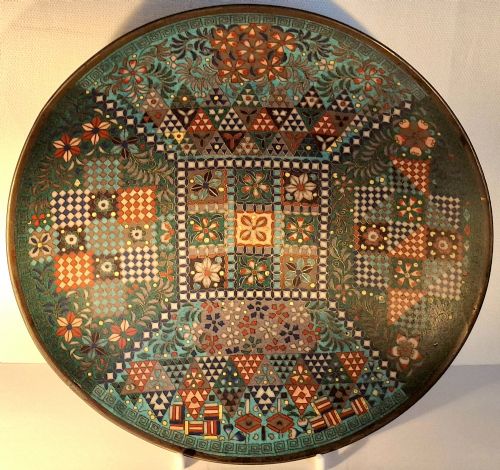
Spectacular Cloisonne Mosaic Dish. Edo Period. Circa 1860.
Price £550
Description
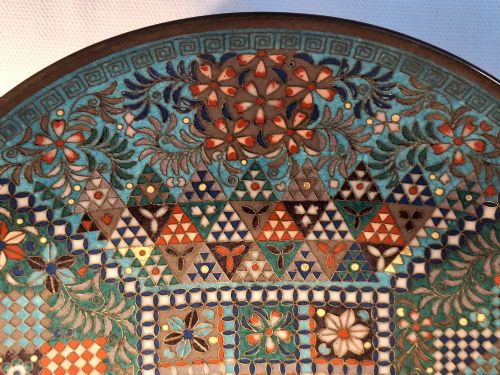
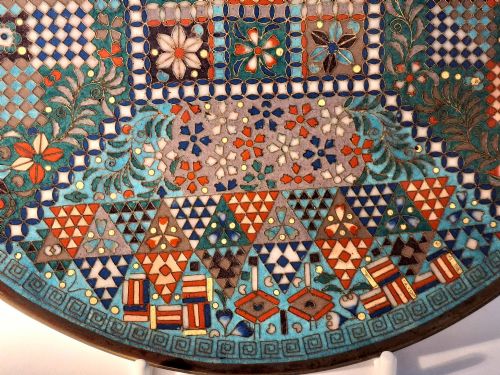
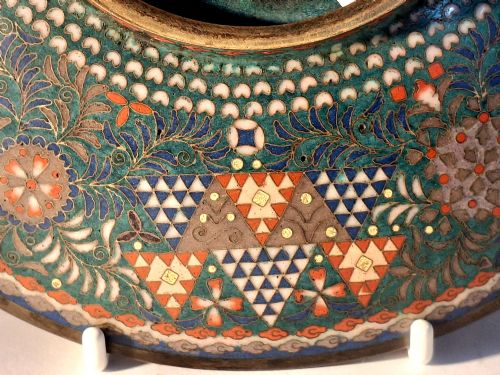
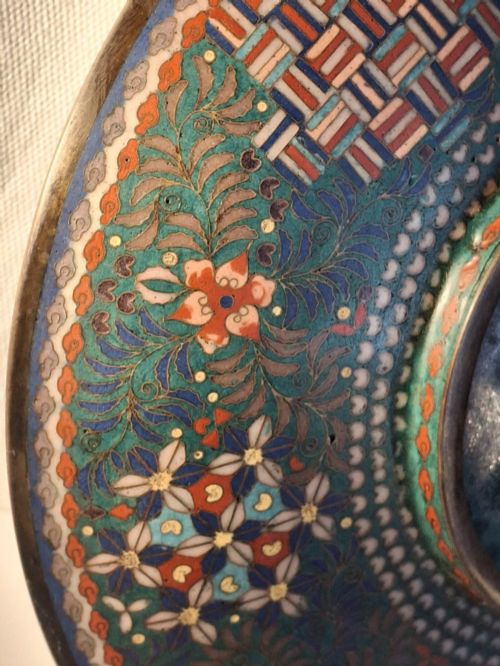
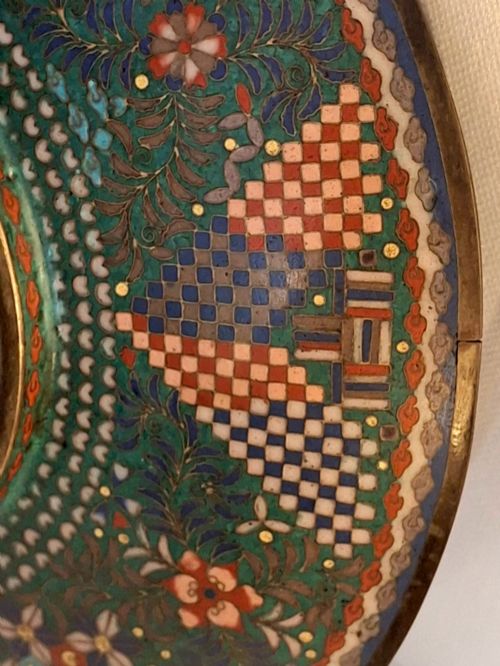
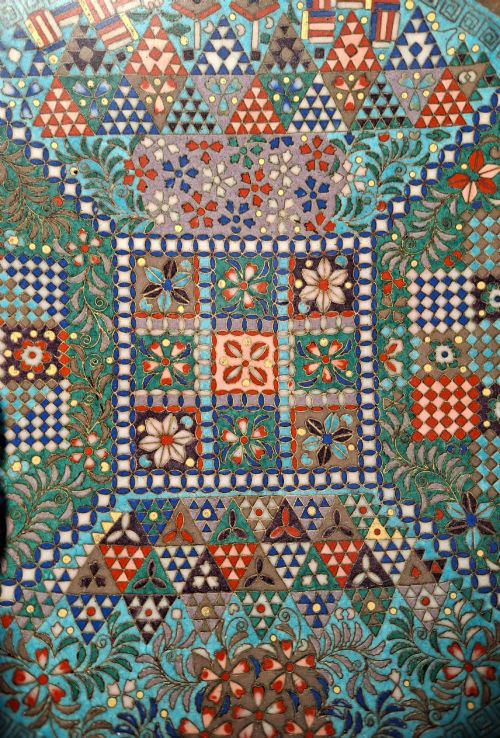
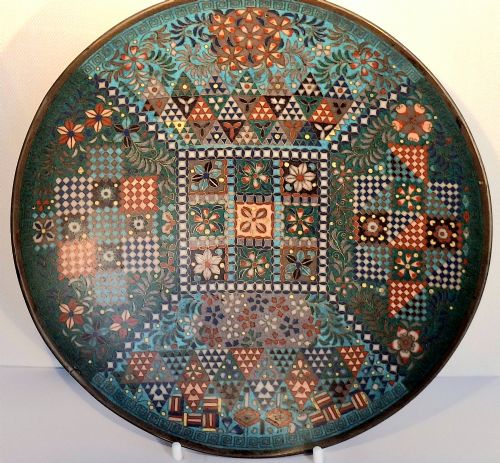
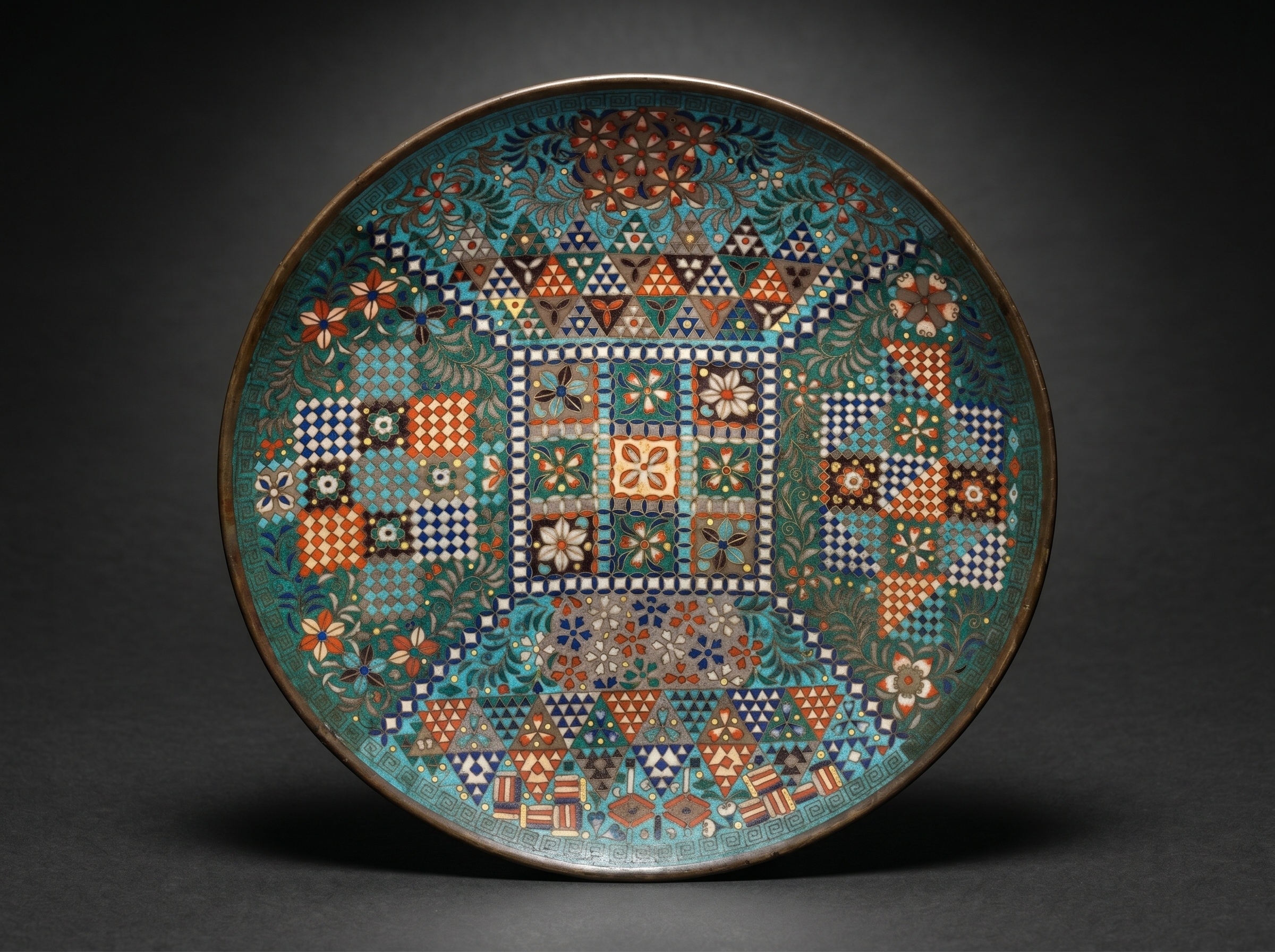
Spectacular and rare cloisonne 'mosaic' Dish. Edo Period. Circa 1860.
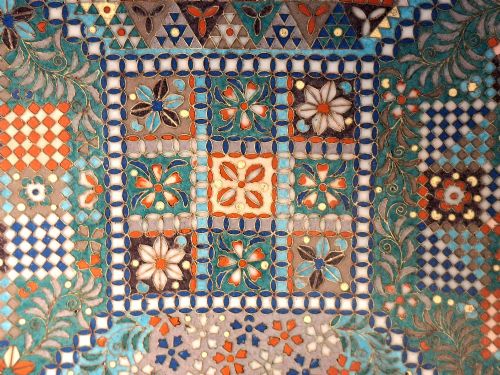
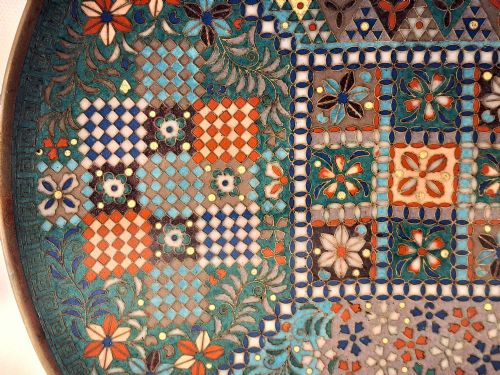
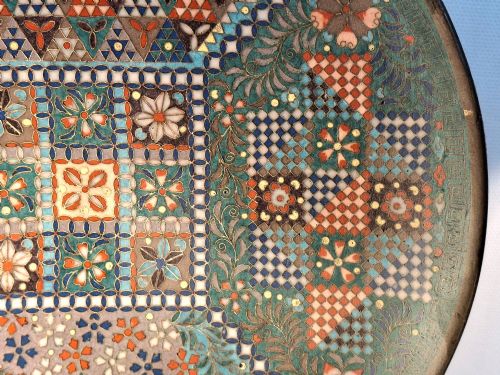
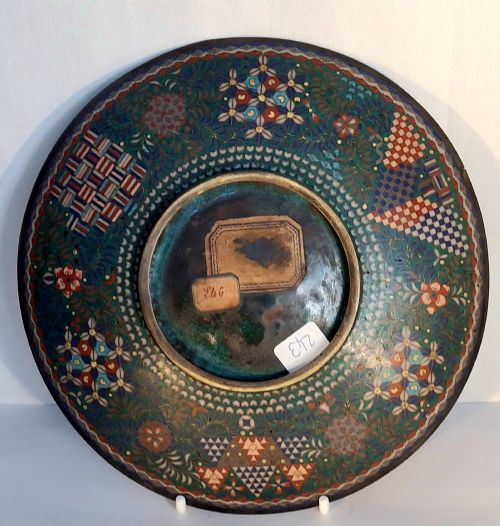
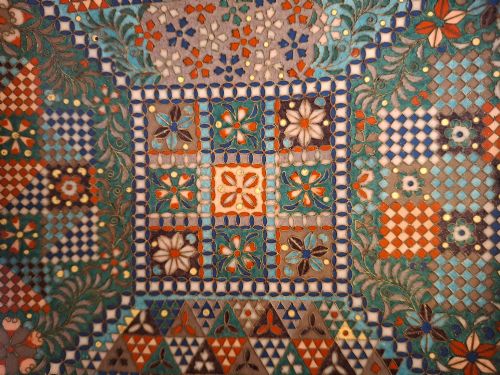
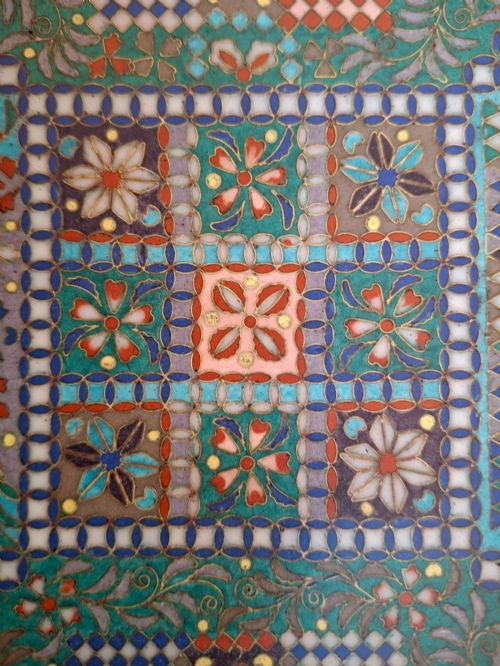
Attributed to Kaji Tsunekichi (1803–83), Nagoya.* He was responsible for the renaissance of Japanese cloisonne. Extremely high-quality cloisonné with brass wire and various coloured enamels. The enamel decoration ''minitiarised'' and of similar scale to the finest of cloisonne-enamel ''ojime'' detailed bead work. The reverse similarly finely decorated. Body is decorated mainly with patterns of Karakusa foliage and Kiku flowers. Square and arrow shaped mosaic panels profusely decorating the dish, filled with traditional Japanese geometrical patterns of: Kojitsunagi, Shippo, Asanoha. This is a very rare item of finest detail and museum quality. Superb.
[Stand not included].
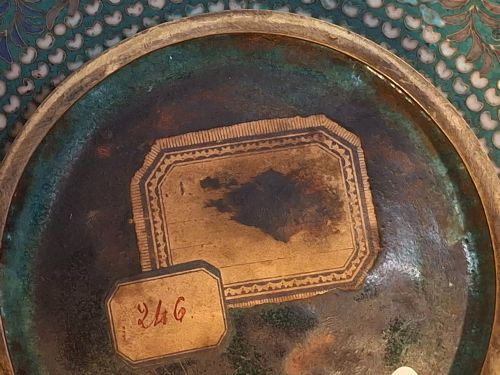
Condition: Excellent original, with original Japanese sales label.
Dimensions (approx):
Diameter = 18.5 cm
Height = 3 cm
* In the 1830s, Kaji Tsunekichi of Nagoya obtained a piece of Cloisonné enamel and deconstructed it in order to examine how it had been made. He then reworked the piece to produce a small dish with wired enamel decoration. By the 1850s he had opened a workshop (Nagoya), taken on students and was appointed as the official maker of Cloisonné in the Owari Province.
**Shippo refers to seven treasures mentioned in Buddhist texts, typically gold, silver, lapis lazuli, crystal, agate, red coral, and carnelian. In art/ patterns, Shippoyaki (cloisonné enamel ware) usually forms a traditional repeating 'circle' pattern (shippo-tsunagi) symbolizing harmony, relationships, and good fortune.
Payment Details
We accept bank transfers. Please contact us for bank transfer details.